Chatblix
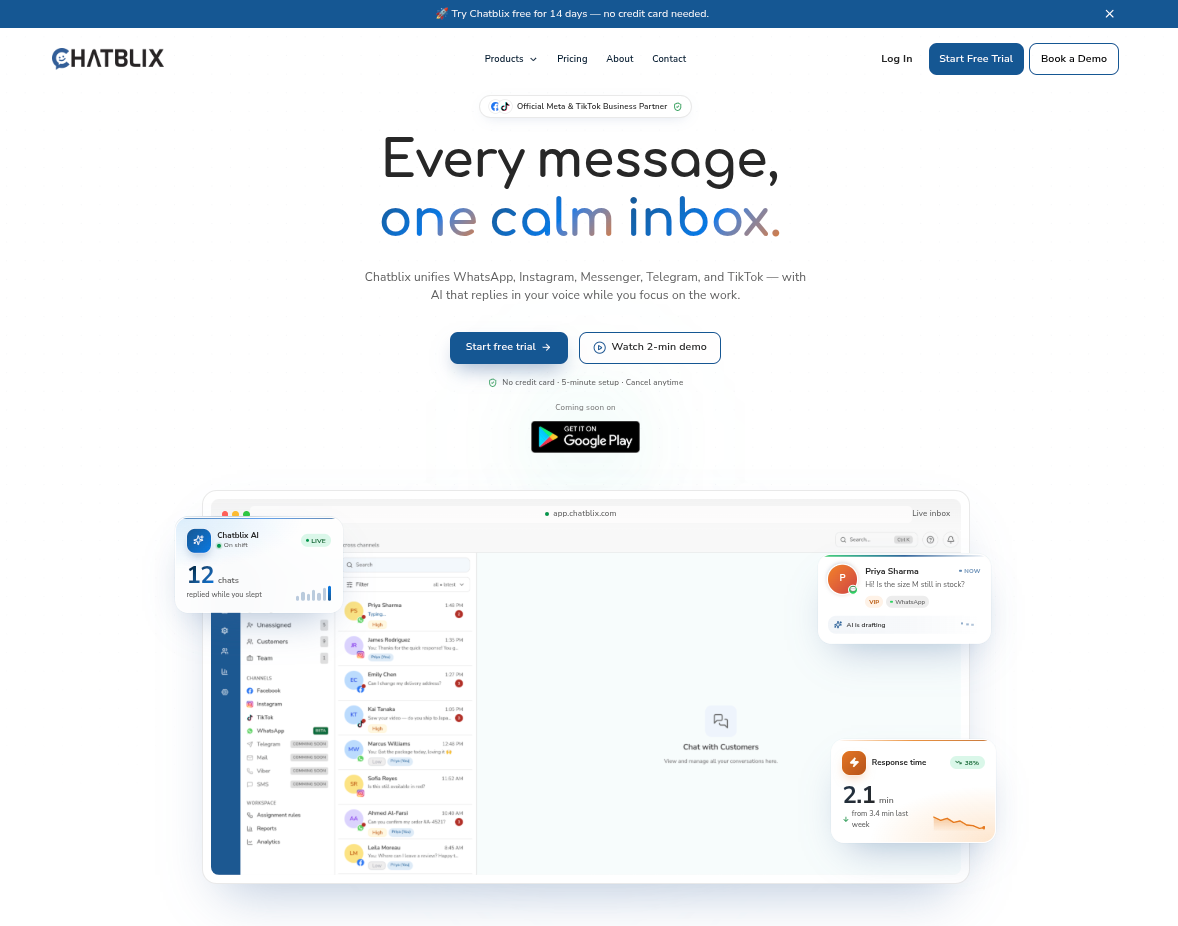
One inbox for WhatsApp, Instagram, Messenger, Telegram & TikTok — with AI that replies in your voice.
Five inboxes, zero overview
Small businesses live inside their DMs. A boutique in Kathmandu might sell through Instagram, confirm orders on WhatsApp, and field questions on Messenger, Telegram, and TikTok — five apps, five notification streams, and no single place to see who is still waiting for a reply.
Messages slipped through the cracks, response times crept up, and every missed conversation was a missed sale. The brief I set myself: collapse all of it into one inbox that a non-technical shop owner could run from a single tab.
Design the conversation, not the channel
I started in Figma with the thing users actually care about — the conversation thread — and made the source platform a small badge instead of a separate world. Every flow was designed around triage: unread first, oldest waiting on top, one keyboard shortcut from reply to done.
The AI assistant came later in the design process, on purpose. Instead of a generic chatbot, it drafts replies in the owner's own tone, learned from their past messages — the human always sends, the AI just removes the blank-page moment.
One schema to hold five platforms
The hard engineering problem was normalisation: five platforms with different message shapes, media types, webhooks, and rate limits, flattened into one PostgreSQL schema so the inbox renders every thread the same way. A Node.js worker layer handles each platform's webhooks and keeps delivery states in sync.
The front end is Next.js with TypeScript end to end — server components for the heavy inbox lists, optimistic updates for replies so the UI never waits on a third-party API to feel fast.
A single tab instead of five apps
Chatblix shipped as a production SaaS at chatblix.com. Businesses answer every channel from one screen, with AI drafts cutting the time-to-first-reply dramatically — and because I owned design and build, the product kept one consistent voice from landing page to inbox.
“The inbox is the product. Everything else — platforms, webhooks, AI — exists to keep one list short.”